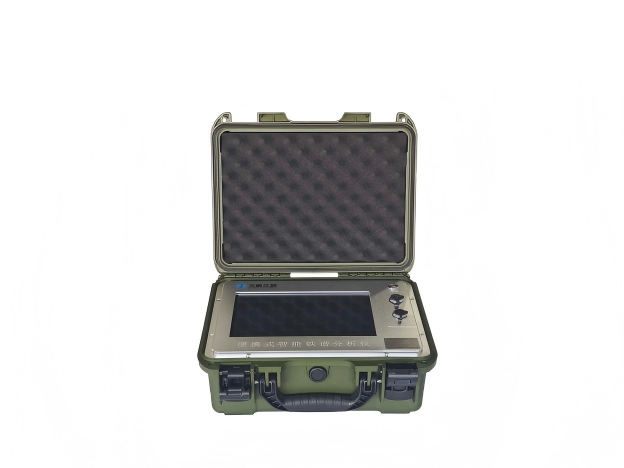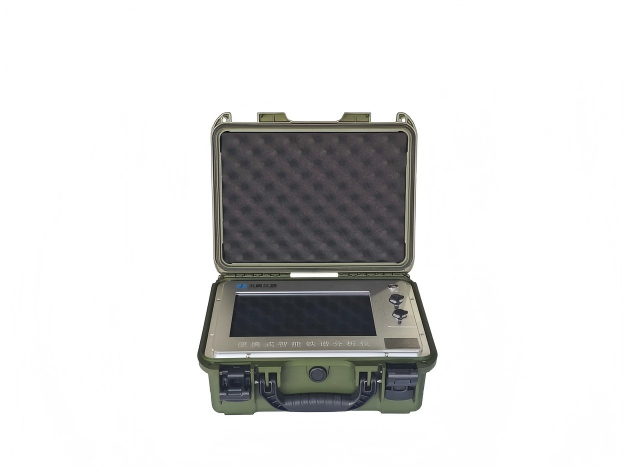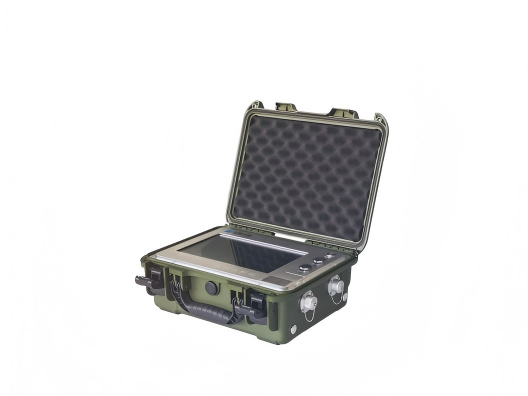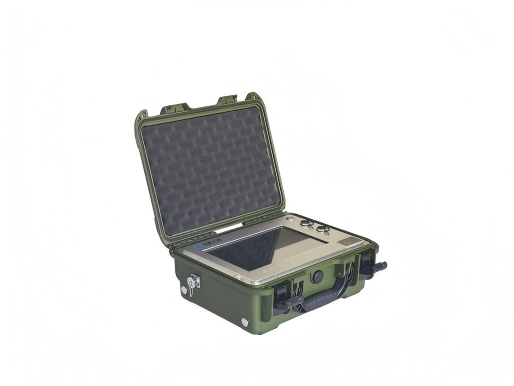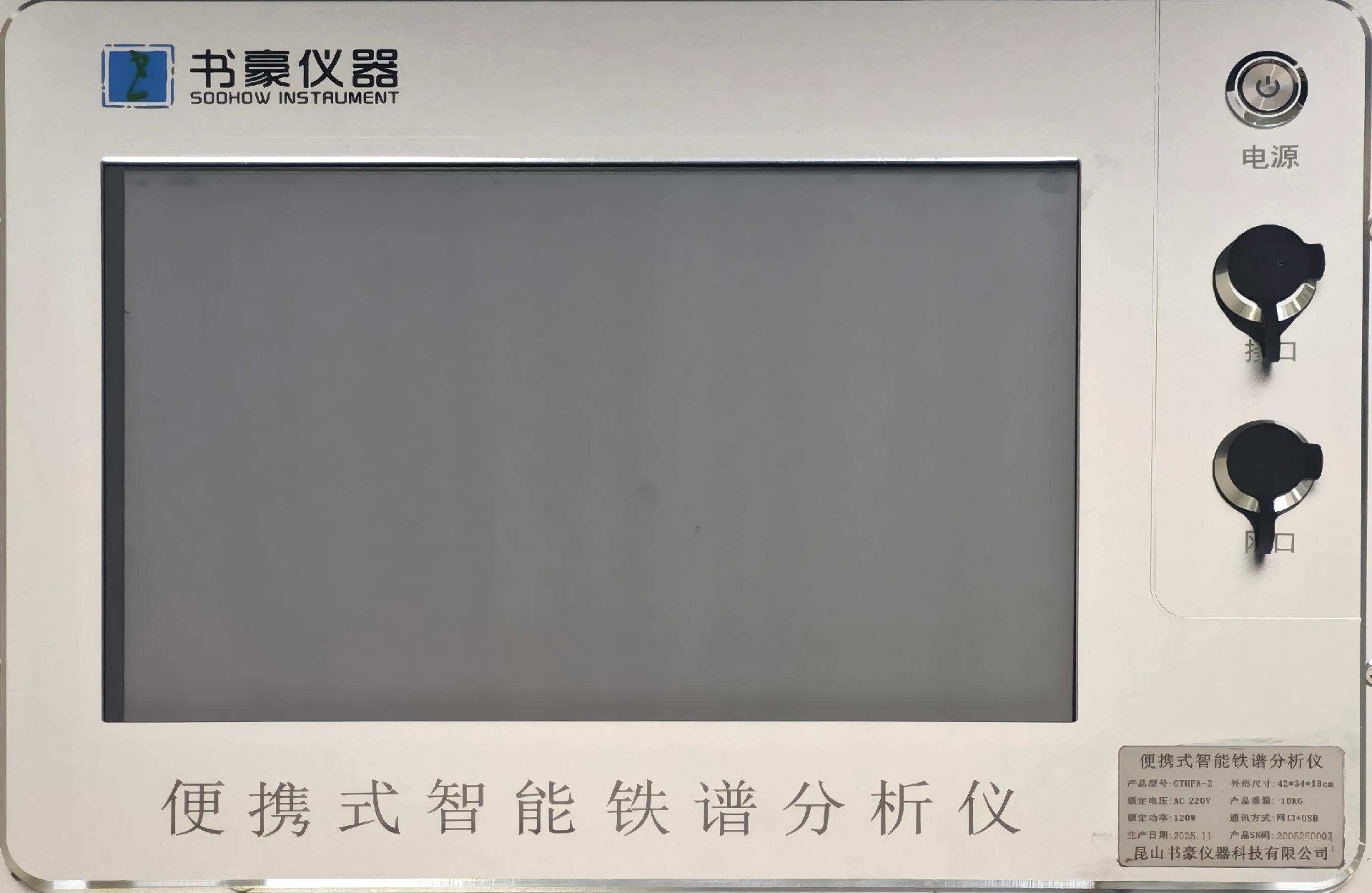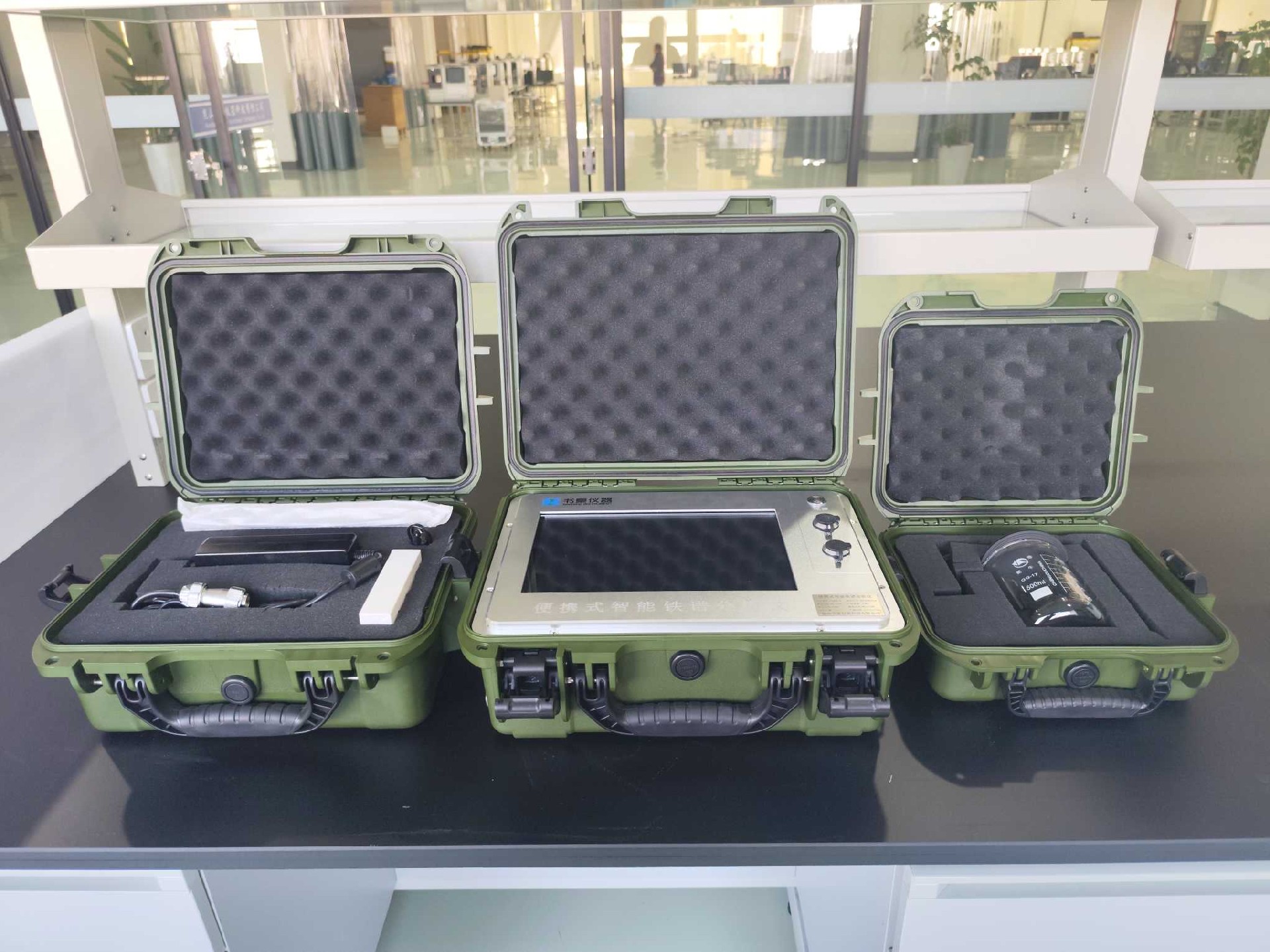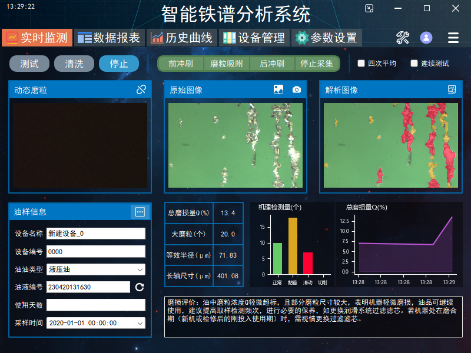
The IFP100 Portable Intelligent Ferrograph Analyzer is a high-end industrial portable detection device developed by SOOHOW for monitoring ferromagnetic metal particles in machine lubricating oil. Its core image detection system first employs excitation technology to capture ferromagnetic particles adsorbed onto the inner surface of the glass in the sample detection cell within the lubricating oil. Utilizing optical lens imaging principles, an industrial CMOS camera acquires images of ferromagnetic particles deposited on the microchannel glass surface of the oil cell. Finally, neural network algorithms process and analyze the wear particle images to enable real-time monitoring of parameters such as size, dimensions, and morphology of ferromagnetic particles in the oil. The instrument system simultaneously features automatic wear mechanism identification, parameter trend analysis, automatic early warning, operation and maintenance recommendations, and automatic generation of inspection reports.
Technical Specifications of the Portable Intelligent Ferrograph Analyzer | |
Product Model | IFP100 |
Detection Principle | Electromagnetic Adsorption and Image Recognition Technology |
Detection Range | 5~500μm |
Light Source | LED Reflective Light Source |
Optical Magnification | 6× |
Industrial Camera | 5-megapixel CMOS camera; resolution 2592×1944 |
Detection Target | Ferromagnetic Particles in Lubricating Oil |
Detection Parameters | Statistical Analysis of Particle Size, Morphology, and Wear Types |
Output Indicators | Total wear amount, number of large and small abrasive particles, equivalent circle radius, major axis dimension, wear evaluation |
Wear Type Output | Normal abrasive particles, adhesive wear particles, sliding wear particles, cutting wear particles |
Analysis Functions | Supports data report querying, exporting, device trend analysis, and automatic generation of analysis reports |
Detection Duration | Less than 1 minute |
Display | 12.1-inch 1280×800 color LCD with touchscreen operation |
CPU | 8-core 64-bit processor; 4 Cortex-A76 cores and 4 Cortex-A55 cores, plus a dedicated NEON coprocessor; Cortex-A76 with a maximum frequency of 2.4 GHz, Cortex-A55 with a maximum frequency of 1.8 GHz |
GPU | Integrated ARM Mali-G610; Built-in 3D GPU; Compatible with OpenGL ES 1.1/2.0/3.2, OpenCL 2.2, and Vulkan 1.2 |
NPU | Embedded NPU supporting; INT4/INT8/INT16/FP16, delivering computing power up to 6 Tops |
RAM | 16GB |
Storage | eMMC 256GB |
Interface Type | Nylon tube with an outer diameter of 6 mm and an inner diameter of 4 mm |
Operating Temperature | -20℃~60℃ |
Operating Voltage | DC 24 V or power adapter |
Maximum Power | Less than 100 W |
Output Port | USB/RJ45 |
Enclosure Material | PP, aluminum alloy |
Weight | 10±0.2kg |
The instrument detection unit employs 6x optical magnification (currently industry-leading) and a 5-megapixel CMOS industrial camera to achieve ultra-high-definition acquisition of wear particle images;
The instrument's internal detection module uses reflective light source illumination, enabling clear observation of wear particle surface textures and color characteristics;
The instrument features a built-in magnetic field strength that can be adjusted steplessly according to monitoring requirements, with 256 adjustment levels available;
The instrument is capable of classifying ferromagnetic wear particles into four wear types: normal abrasive particles, adhesive wear, sliding wear, and cutting wear;
The instrument software incorporates oil sample and device editing management functions, historical detection data report queries, device wear type, and wear particle quantity trend statistical analyses.
The instrument is equipped with automatic sample injection and automatic cleaning functions, includes sample cell cleaning effect monitoring (via software), and allows the duration of automatic sampling and automatic cleaning to be set.
The instrument automatically generates detection result reports and provides wear evaluation recommendations and maintenance advice based on the detection results.
The instrument employs a high-strength injection-molded housing with a compact structure and lightweight design for convenient portability.
The instrument panel is manufactured using high-precision integrated aluminum alloy machining technology, characterized by a simple, aesthetically pleasing, and durable design.